Enterprise & fleet
Utility, logistics and heavy industry fleets operate in terrain, weather and emergency conditions that cannot be staged safely on real roads. We build simulation platforms that let a training team rehearse them deliberately.
The problem with fleet driver training
Conventional programmes teach procedure in a classroom and hope exposure does the rest. The situations that actually cause incidents — a mountain descent in degraded weather, an off-road access route, an emergency response under time pressure — are the ones that cannot be rehearsed on a real road with a real vehicle and a real crew.
Simulation moves those situations from chance to schedule.
Validated program
Utility fleets operate in conditions that cannot be rehearsed safely on real roads: mountain terrain, off-road access, degraded weather and emergency response. Training for these situations traditionally depends on exposure — waiting for the situation to happen.
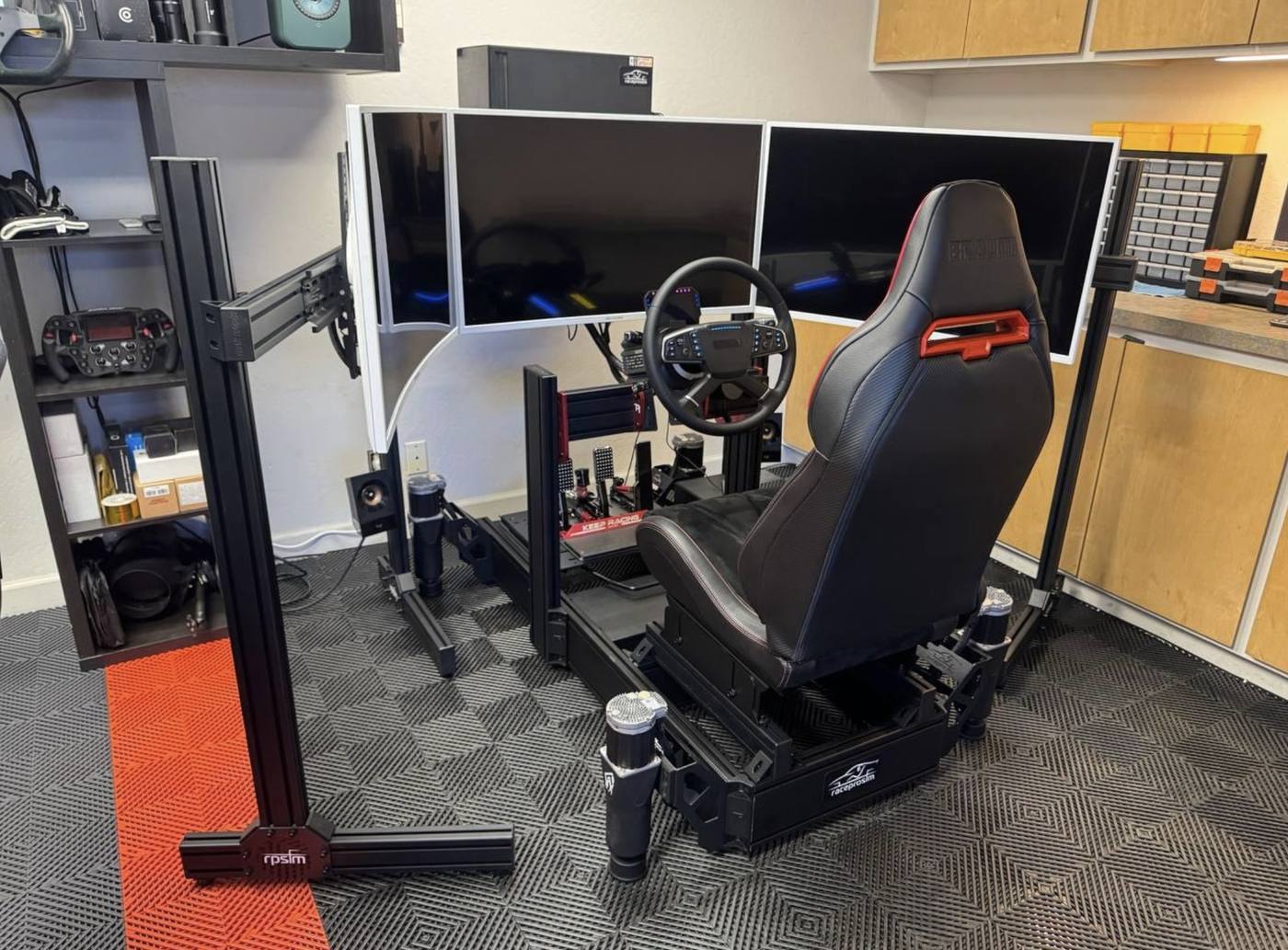
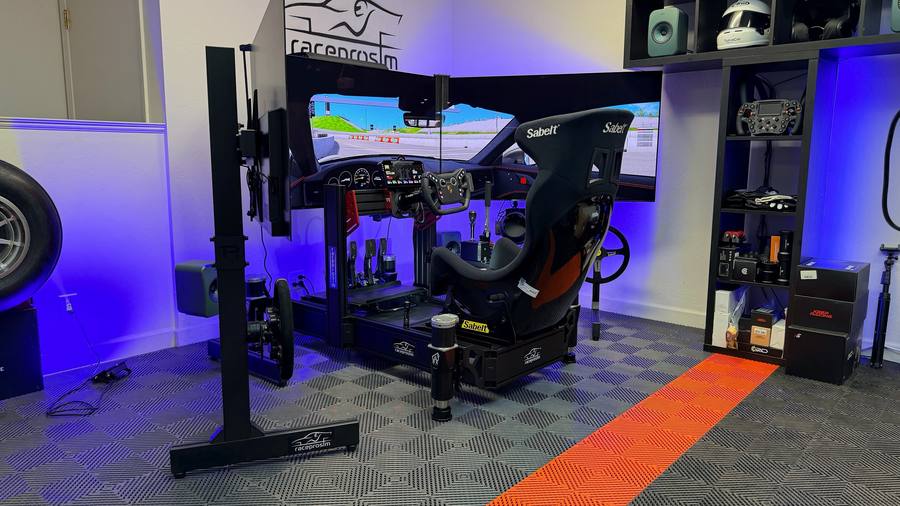
A simulation platform configured for commercial vehicle operation, with vehicle models built from the operator's real fleet requirements and environments covering urban, mountain and off-road conditions with configurable weather and terrain. Scenarios launch from a single custom control panel — no Windows, no simulation software, no technical operator required.
The prototype was completed and tested in April 2026, with on-site validation carried out together with the PG&E team. Core functionality and concept were confirmed, and the program is moving into extended testing under real operating conditions.
On the nature of this engagement: PG&E is not a RaceProSim customer and does not operate a RaceProSim system in service. We designed and built a driver safety training prototype for evaluation, and validated it on site together with the PG&E team in April 2026. The program is in extended testing. About PG&E ↗
What a training team can run
Mountain descents, unpaved access routes, gradients and surfaces that determine how a loaded fleet vehicle behaves — repeated until the response is trained rather than improvised.
Rain, low visibility, reduced grip and night operation, configurable per session so the same route can be run under progressively harder conditions.
Time pressure, unexpected obstacles and recovery from loss of control — the scenarios that carry the highest consequence and the least real-world practice.
Repeatable routes make performance comparable between drivers and over time, and internal competition turns a compliance exercise into something crews want to attend.
How an enterprise engagement starts
Fleet profile, operating conditions, existing training structure and what an incident currently costs the organisation.
We agree which situations the program must reproduce, and which vehicles the models are built from.
A working system is built and validated on site with your training team, as in the utility program above.
The program runs under real operating conditions before any decision about scale is made.
Start the conversation
No deposit and no configurator for enterprise engagements — this path starts with a conversation. The utility case study is shared directly with qualified organisations, not published for download.